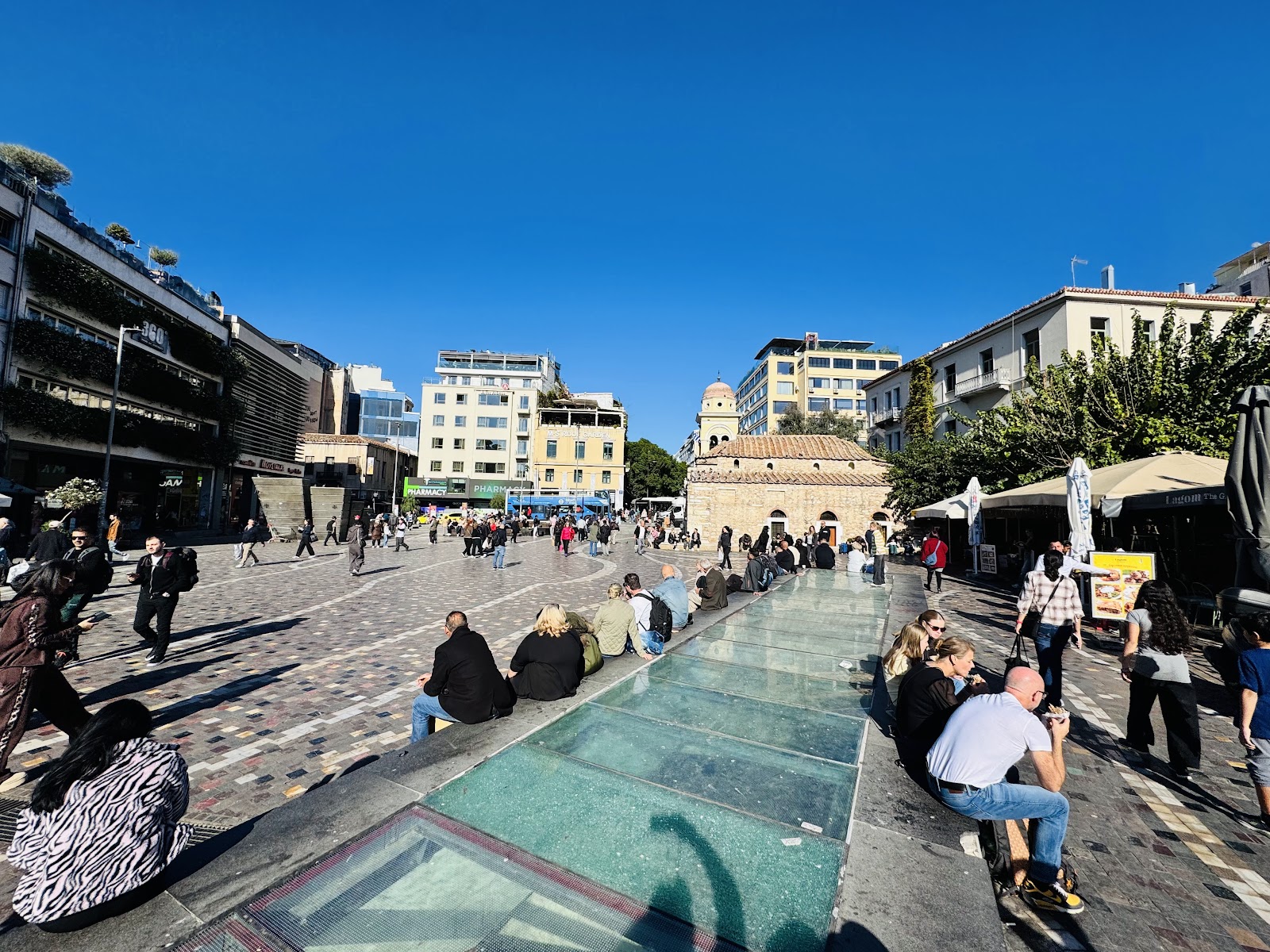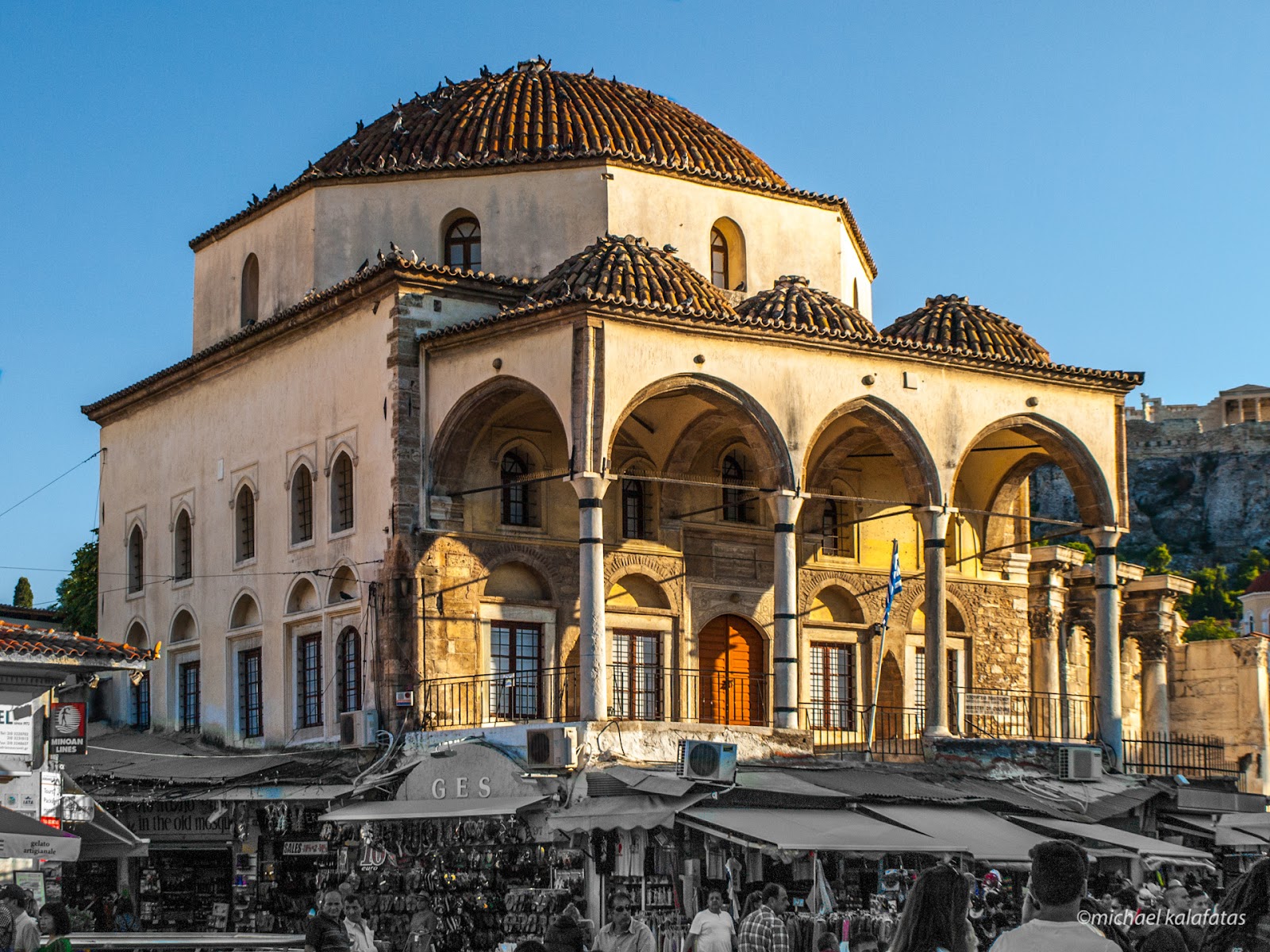
The low pink-and-white building with the arched porch on the edge of Monastiraki Square is a mosque. Built seventeen fifty-nine, no minaret any more, and it's a museum now. Look at the plaster on it. That smooth white finish is why anybody remembers the man who built it.
He was Mustafa Agha Tzistarakis, the Ottoman governor of Athens. He wanted a mosque, and he wanted it finished properly, and finishing it properly meant lime.
The lime is the part that explains what happened to a great deal of ancient Athens. You make lime by burning limestone in a kiln until it collapses into a white powder, and you mix that with water and sand to get plaster and mortar. Marble is limestone — better limestone. Burn marble and you get the whitest, hardest lime available, and Athens was carpeted in marble that was already cut, already dressed, and already lying loose on the ground.
For centuries the ruins of this city went into the kilns as fuel as well as into the walls as blocks. Statues, columns,
inscriptions, tombstones, cooked down into the plaster on somebody's wall. Almost none of it was written down, because it was about as remarkable as taking gravel out of a riverbed.
Tzistarakis just did it too visibly. He wanted a large amount of very good lime at once, so he sent men to an ancient column, packed it with gunpowder, and blew it up.
Tradition in Athens says it was a column of the