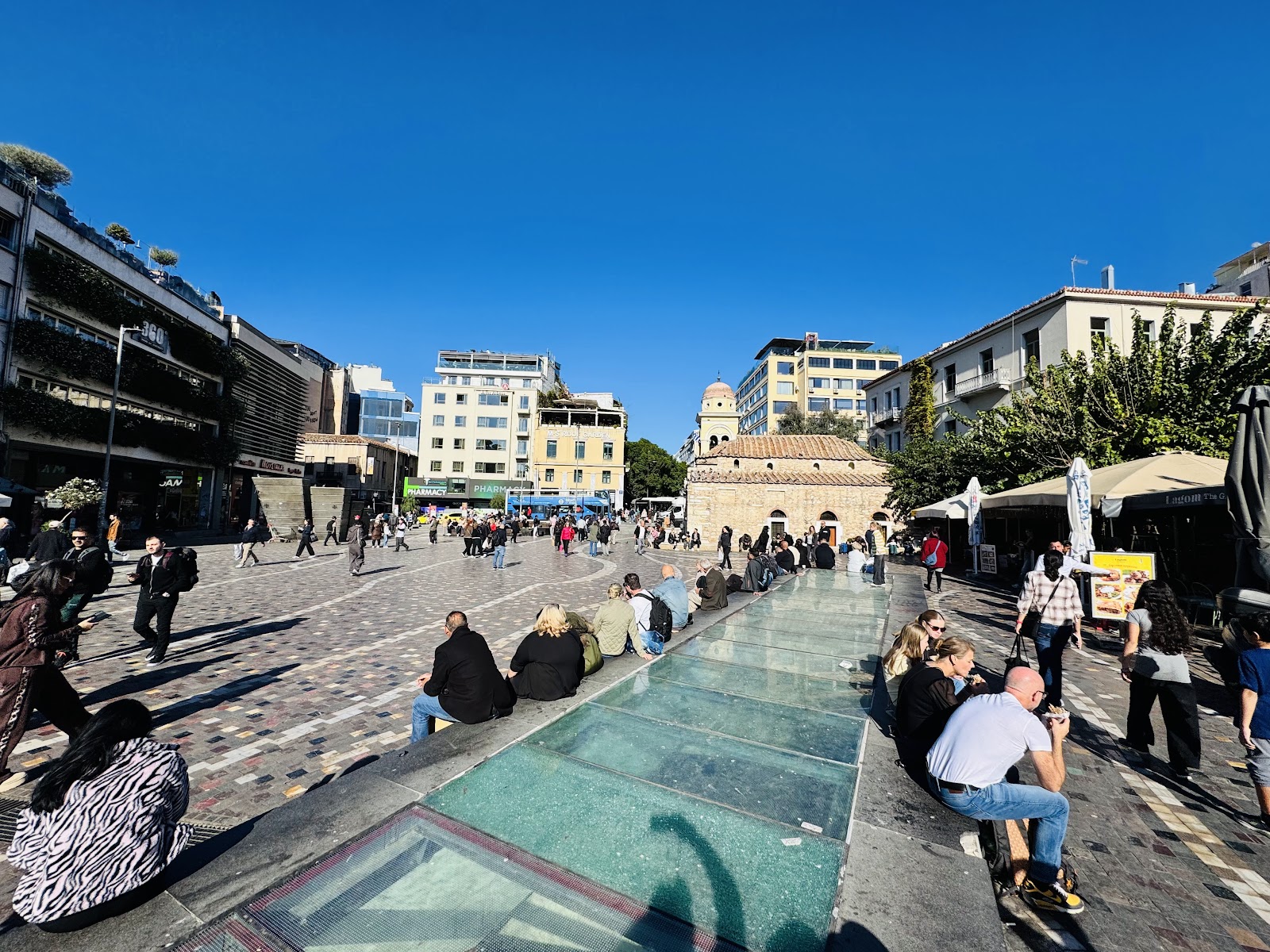
The octagonal marble tower ahead of you is the Tower of the Winds, and it is the most quietly astonishing object in Athens. Twelve metres high, eight flat sides, and near the top of each side a carved winged man flying sideways. Those are the winds. One face each.
The one facing north is Boreas, an old man in a thick cloak blowing into a twisted shell, because the north wind arrives cold. The west face is Zephyrus, a young man carrying flowers loose in the fold of his cloak, because the west wind brings the spring. Every side of the building tells you what the weather does when it comes from that direction.
It was built somewhere around a hundred years before Christ by a man named Andronikos of Kyrrhos, and everything else about it is a machine.
Start with the outside. Below the wind figures, cut into the marble faces, are the lines of at least nine sundials. Not one. Nine, angled for the different faces, so that whichever side of the tower the sun happened to be on, somebody standi
ng in the street could read the hour off the wall.
On the roof there was a bronze Triton — a sea creature with a fish's tail — mounted so he turned freely, holding a rod out in front of him. As the wind shifted, he swung round, and the rod came to rest pointing down at the carving of whichever wind was blowing. The building told you the time and then told you the weather by pointing at a picture