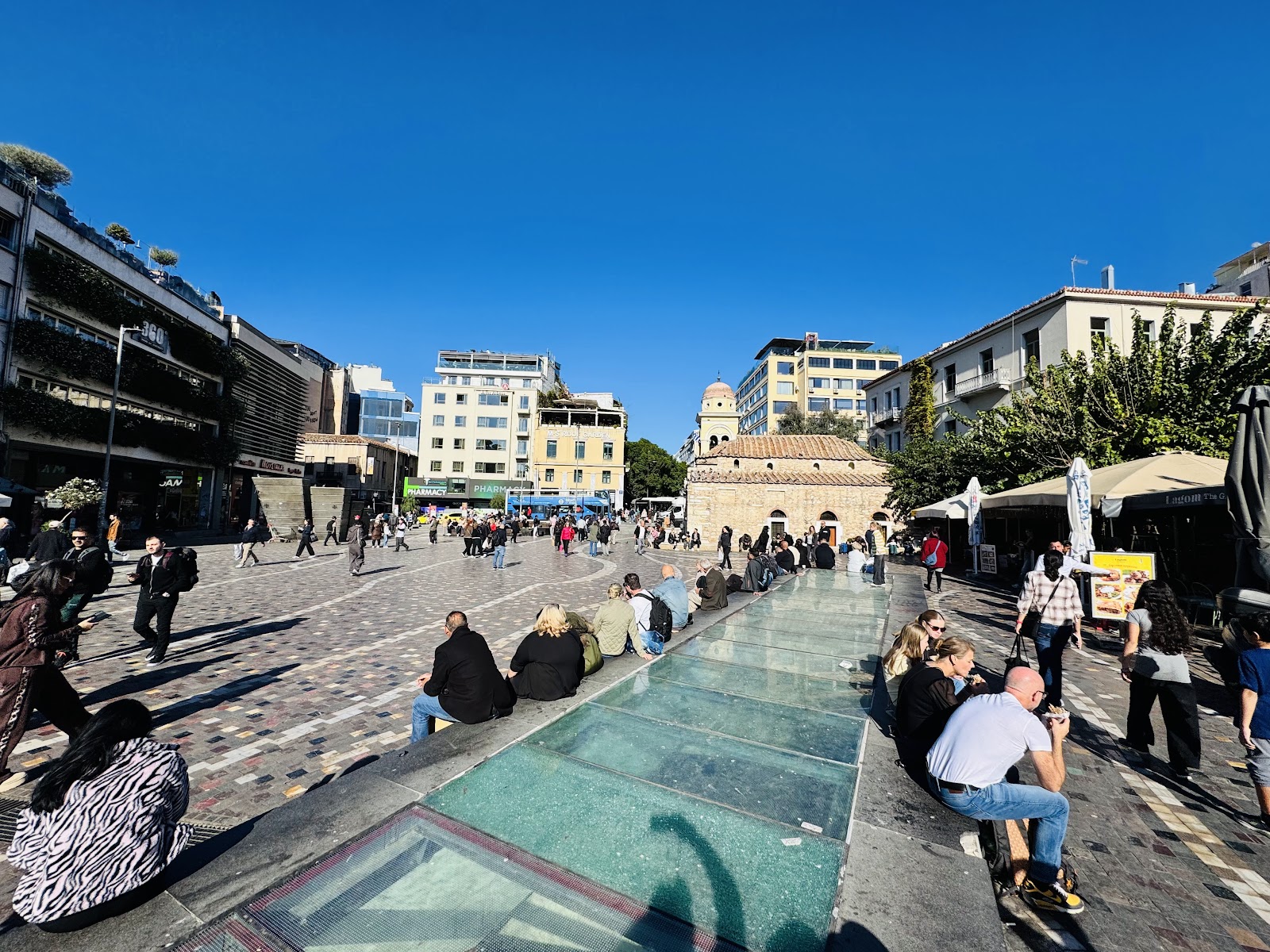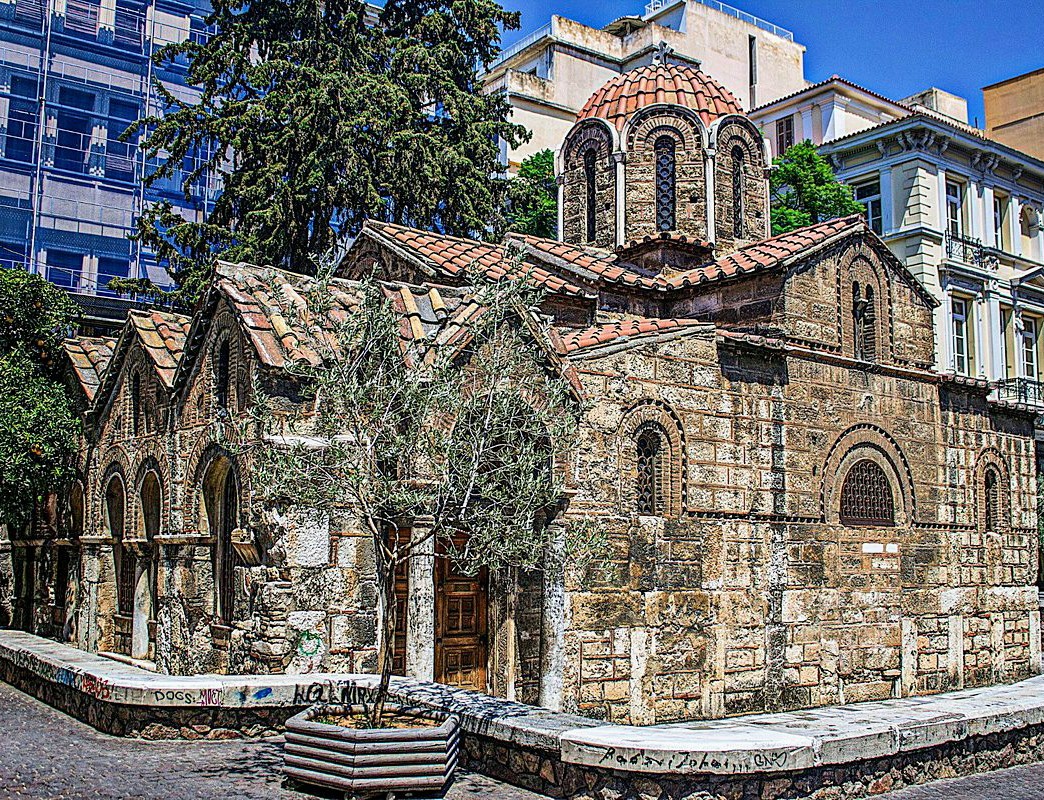
You've found Kapnikarea, the eleventh-century church sitting in a hole in the middle of the shopping street. Look at where the pavement goes. Ermou splits and runs past it on both sides, the shop fronts with it, and the ground drops away to meet the church door.
The church got here first. Ermou is eight hundred years younger.
And it hasn't sunk, whatever it looks like. Athens rose around it. The new street was laid at a higher level than the eleventh-century ground, so the church stayed exactly where it had always been and the city came up past its knees.
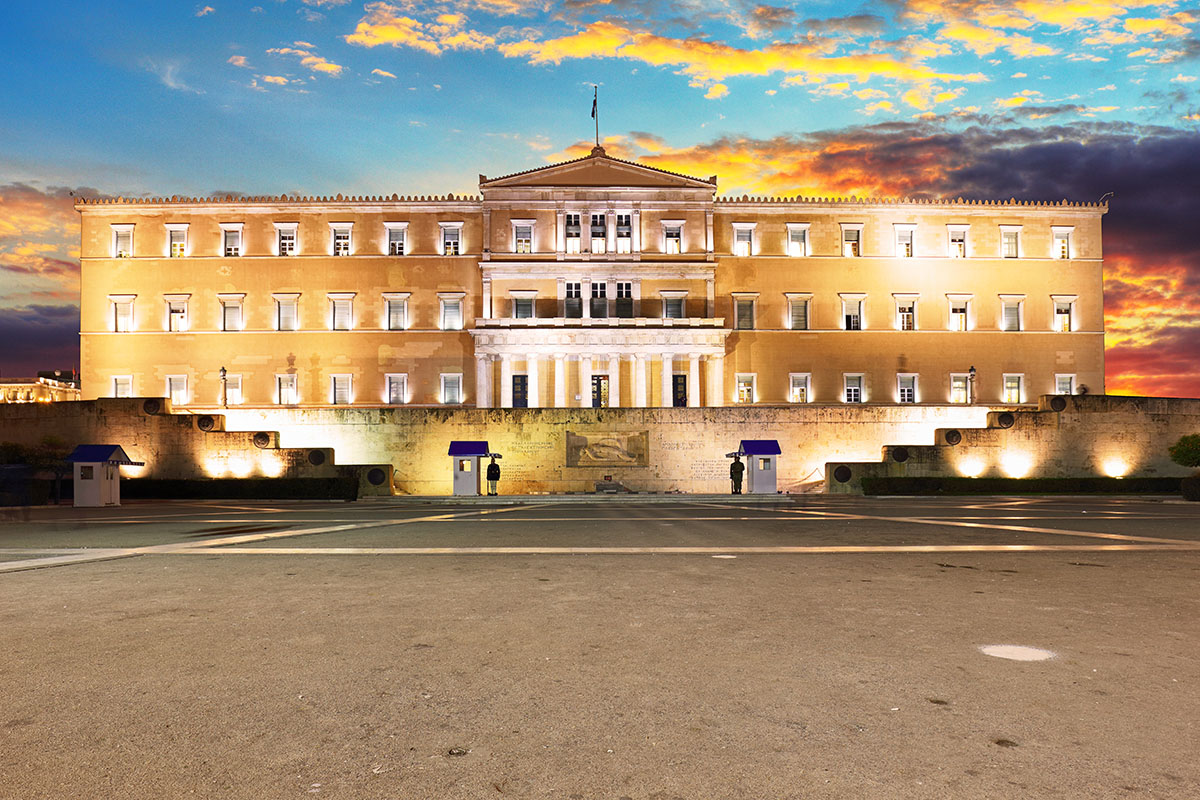
In eighteen thirty-four Athens became the capital of a country that had just fought its way out of an empire. A German architect called Leo von Klenze got part of the job of turning the village into a European capital. Klenze drew a grand straight avenue running west from the new palace. This church was standing in the middle of the line. The plan didn't include it, and the order went out to demolish it.
What saved it was a letter
from Munich.
Otto, the young Bavarian who had been handed the Greek throne, had a father back home. That was Ludwig, the King of Bavaria — an obsessive collector of Greek antiquity, with strong opinions about the country from a comfortable distance of a thousand miles. Ludwig heard what was about to happen to this church and objected. The demolition was stopped. The avenue was built anyway. It j